


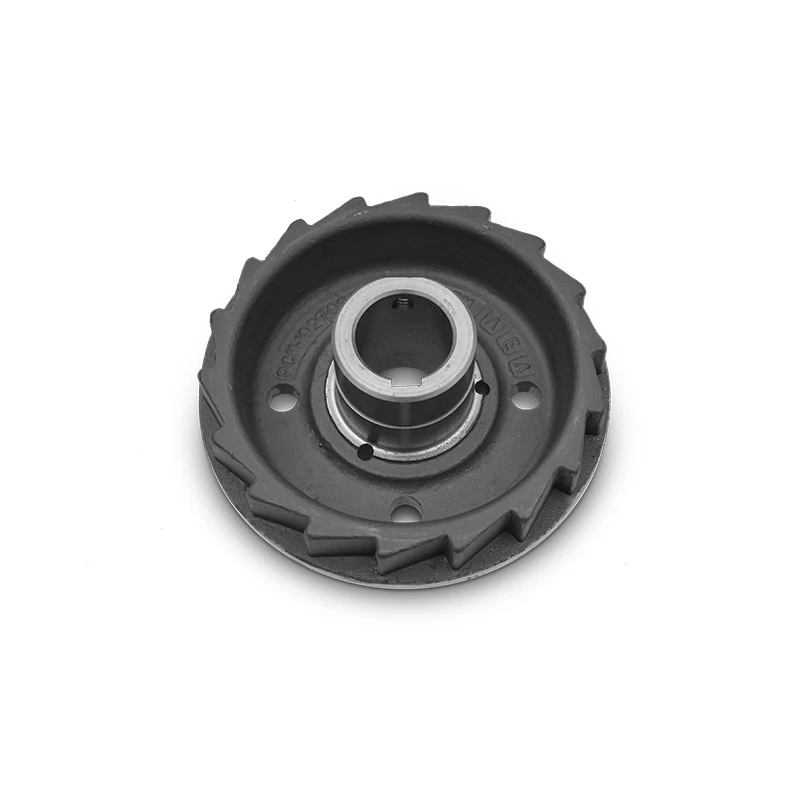
Ratchet wheels are essential components in various mechanical systems, providing a mechanism for one - way motion. As a supplier of Ratchet Wheel, I have in - depth knowledge of the materials used to manufacture these crucial parts. In this blog, I will explore the different materials commonly employed in ratchet wheel production, their properties, and the applications where they are most suitable.
Metals
Metals are the most widely used materials for ratchet wheels due to their strength, durability, and ability to withstand high loads and wear.
Steel
Steel is a popular choice for ratchet wheels because of its excellent mechanical properties. Carbon steel, in particular, is often used. It has high strength and hardness, which allows the ratchet wheel to resist deformation under heavy loads. For example, in industrial machinery where large forces are involved, carbon steel ratchet wheels can ensure reliable operation.
Alloy steels are also commonly used. These steels are alloyed with elements such as chromium, nickel, and molybdenum to enhance their properties. Alloy steel ratchet wheels have improved corrosion resistance, toughness, and wear resistance compared to carbon steel. In applications where the ratchet wheel is exposed to harsh environments, such as in marine or chemical processing industries, alloy steel is a preferred material.
The manufacturing process for steel ratchet wheels typically involves forging, machining, and heat treatment. Forging helps to refine the grain structure of the steel, increasing its strength. Machining is used to achieve the precise shape and dimensions of the ratchet wheel, and heat treatment is applied to further improve its hardness and toughness.
Stainless Steel
Stainless steel is another metal option for ratchet wheels. It is highly corrosion - resistant, making it ideal for applications where the ratchet wheel will be exposed to moisture, chemicals, or other corrosive substances. This resistance to corrosion ensures a long service life, even in harsh conditions.
Austenitic stainless steels, such as 304 and 316, are commonly used for ratchet wheels. They have good ductility and formability, which allows for easy manufacturing. However, they are relatively softer compared to some carbon and alloy steels, so they may not be suitable for applications with extremely high loads or severe wear.
Stainless steel ratchet wheels are often used in food processing equipment, medical devices, and outdoor applications where corrosion protection is crucial. The smooth surface of stainless steel also makes it easy to clean, which is important in industries with strict hygiene requirements.
Brass
Brass is a copper - zinc alloy that is known for its good machinability, corrosion resistance, and low friction coefficient. Ratchet wheels made of brass are often used in applications where noise reduction is important, as brass has better damping properties compared to steel.
Brass ratchet wheels are commonly found in consumer products, such as small hand tools and clock mechanisms. The relatively low cost of brass also makes it an attractive option for these types of applications. However, brass has lower strength compared to steel, so it is not suitable for heavy - duty applications.
Plastics
Plastics are increasingly being used in the production of ratchet wheels, especially in applications where weight reduction, cost - effectiveness, and electrical insulation are required.
Nylon
Nylon is a popular plastic material for ratchet wheels. It has high strength, good wear resistance, and low friction. Nylon ratchet wheels are lightweight, which is beneficial in applications where weight is a concern, such as in portable equipment.
Nylon also has good chemical resistance and can withstand a wide range of temperatures. It can be easily molded into complex shapes, which reduces the need for extensive machining. Nylon ratchet wheels are commonly used in automotive interior components, consumer electronics, and some light - duty industrial applications.

Polycarbonate
Polycarbonate is a strong and transparent plastic with excellent impact resistance. Ratchet wheels made of polycarbonate are often used in applications where visibility or transparency is required. For example, in some inspection equipment or control panels, polycarbonate ratchet wheels can be used to allow operators to see the internal components.
Polycarbonate also has good heat resistance and electrical insulation properties. However, it is more brittle compared to nylon, so it may not be suitable for applications with high - impact loads.
Acetal
Acetal, also known as polyoxymethylene (POM), is a plastic with high stiffness, low friction, and excellent dimensional stability. Acetal ratchet wheels are often used in precision mechanisms, such as in watches and small mechanical devices.
The low friction coefficient of acetal reduces wear and allows for smooth operation. Acetal also has good chemical resistance and can be easily machined or molded. However, it is sensitive to high temperatures and may deform at elevated temperatures.
Composite Materials
Composite materials are made by combining two or more different materials to achieve enhanced properties. In the case of ratchet wheels, composite materials can offer a unique combination of strength, light weight, and other desirable characteristics.
Fiberglass - Reinforced Plastics
Fiberglass - reinforced plastics (FRP) consist of a plastic matrix, such as polyester or epoxy, reinforced with glass fibers. FRP ratchet wheels have high strength - to - weight ratios, making them suitable for applications where both strength and light weight are required.
The glass fibers provide reinforcement, increasing the strength and stiffness of the ratchet wheel. FRP also has good corrosion resistance and can be molded into complex shapes. These ratchet wheels are often used in aerospace, marine, and some high - performance industrial applications.
Carbon Fiber - Reinforced Plastics
Carbon fiber - reinforced plastics (CFRP) are even stronger and lighter than FRP. The carbon fibers have extremely high strength and stiffness, which gives CFRP ratchet wheels excellent mechanical properties.
CFRP ratchet wheels are used in high - end applications, such as racing cars, aerospace components, and advanced robotics. However, the high cost of carbon fiber limits its use to applications where the performance benefits justify the expense.
Applications and Material Selection
The choice of material for a ratchet wheel depends on the specific application requirements. For heavy - duty industrial applications, such as in large manufacturing equipment and construction machinery, steel ratchet wheels are usually the best choice due to their high strength and durability.
In applications where corrosion resistance is crucial, such as in the food and beverage industry or marine environments, stainless steel or certain plastics may be more suitable. For example, Valve Cover and Motor Case in some corrosive environments may require components with high - quality corrosion - resistant materials.
For consumer products and light - duty applications, plastics or brass ratchet wheels can provide a cost - effective solution. The low weight and noise - reducing properties of these materials are also beneficial in these applications.
In high - performance and precision applications, composite materials or high - grade metals may be used to meet the strict performance requirements.
Conclusion
As a supplier of ratchet wheels, I understand the importance of choosing the right material for each application. Whether it is a metal, plastic, or composite material, each has its own unique properties and advantages. By carefully considering the application requirements, such as load capacity, corrosion resistance, weight, and cost, we can select the most appropriate material to ensure the optimal performance and longevity of the ratchet wheel.
If you are in the market for ratchet wheels or have any questions about material selection, please feel free to contact us for a detailed discussion. We are committed to providing high - quality ratchet wheels tailored to your specific needs.
References
- ASM Handbook Committee, ASM Handbook Volume 1: Properties and Selection: Irons, Steels, and High - Performance Alloys. ASM International, 1990.
- Plastics Engineering Handbook of the Society of Plastics Engineers, Inc. Hanser Gardner Publications, 1991.
- Metals Handbook Desk Edition, 2nd Edition. ASM International, 1998.


